Every year, hundreds of Los Angeles pedestrians are struck by cars, and the first question most injured victims ask is what their claim is worth. The scale of the problem is stark:
- In 2023, California recorded the highest number of pedestrian deaths in the United States, with 1,106 fatalities according to NHTSA data.
- Preliminary 2024 data show an estimated 928 pedestrian fatalities, a 15.6% decrease from 2023.
- In April 2026, NHTSA estimated 36,640 total U.S. traffic fatalities for 2025, a 6.7% decrease from 2024 and the second-lowest fatality rate on record, yet pedestrians remain overrepresented in California's urban crash data.
That's why having the right legal team matters. Cohen & Marzban have deep roots in the Los Angeles community. We understand the local laws and have decades of experience handling pedestrian accident claims. Our experienced pedestrian accident attorneys are dedicated to getting you the justice you deserve.
What Is the Average Settlement for a Pedestrian Hit by a Car in California
If you've been hit by a car as a pedestrian in California, you're likely wondering about potential settlement amounts. While every case is unique, settlements for minor injuries typically range from $10,000 to $75,000. However, average payouts for more severe injuries and catastrophic injuries can reach millions of dollars.
It's important to understand that the severity of your injuries significantly impacts your potential settlement.
These ranges are general benchmarks for a pedestrian hit by car settlement, not guarantees. Two claims with identical injuries can settle very differently depending on liability, insurance limits, and the strength of the evidence.
Is There a Guaranteed Minimum Settlement for Pedestrian Accidents?
Unfortunately, there's no guaranteed minimum settlement for pedestrian accidents in California. The amount you can recover depends on many factors specific to your case. While some states might have minimum insurance requirements that seem like a guaranteed payout, those often don't reflect the full extent of your damages, especially for serious injuries.
Additionally, California's pure comparative negligence rule means your compensation can be reduced if you're found even partially at fault. Non-economic damages, such as pain and suffering, also vary widely and are not subject to fixed formulas, making the idea of a "guaranteed minimum" misleading.
Factors Influencing a Pedestrian Accident Settlement
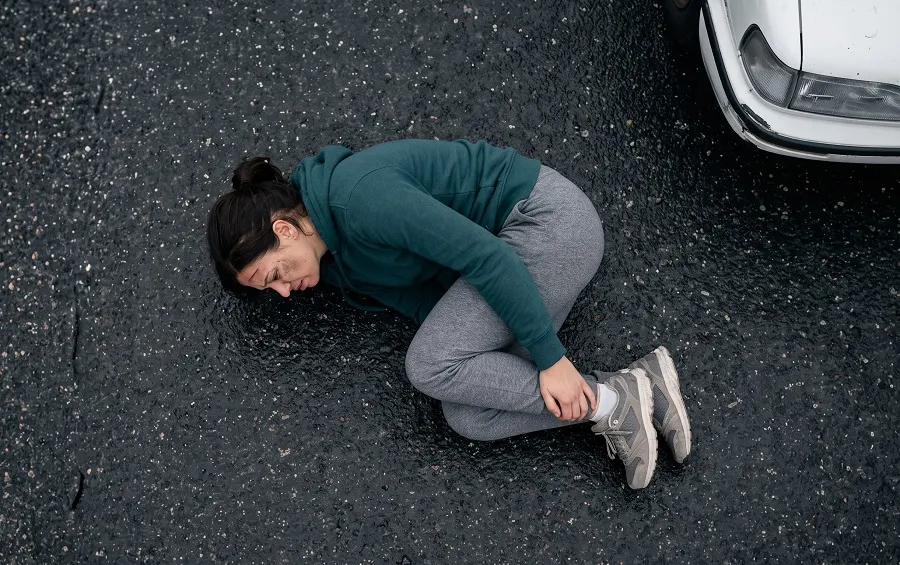
Several key factors can significantly influence the potential value of your pedestrian accident settlement. Understanding these factors can help you better prepare for the claims process and work effectively with your attorney.
- Insurance coverage: If your damages exceed the driver's policy limits, you may be able to pursue compensation through your own uninsured/underinsured motorist (UM/UIM) coverage if you have it. This coverage can help bridge the gap when the at-fault driver lacks sufficient insurance to cover your losses.
- Liability and fault: Even if you are partially at fault for the accident, you can still recover compensation, although your award will be reduced by your percentage of fault. Factors such as jaywalking or crossing against a traffic signal can be considered when determining fault.
- Severity of injuries: Minor injuries typically result in lower settlements than severe injuries. The long-term impact of your injuries, including any permanent disabilities or ongoing medical needs, will also be considered.
- Lost wages and earning capacity: If your injuries prevent you from working, you can recover compensation for lost wages. This includes both past lost wages from the time of the accident until you return to work and future lost wages if your injuries result in long-term or permanent disability.
- Pain, suffering, and emotional distress: These damages compensate for the physical pain, emotional trauma, and diminished quality of life caused by the accident. While more challenging to quantify, these damages are an essential part of a fair settlement.
- Location of the accident: Jury verdicts and the cost of living can vary significantly across California's regions. Settlements in urban areas with a higher cost of living might be higher than settlements in rural areas.
Because of these variables, it's crucial to consult with a skilled pedestrian accident attorney who can accurately assess your specific situation and fight for the full compensation you deserve.
California Laws Related to Pedestrian Accidents
Understanding California law governing pedestrian accidents helps victims protect their rights and maximize compensation. Several key statutes and regulations impact pedestrian injury claims.
Key California Pedestrian Safety Laws
- California Vehicle Code Section 21950 — right of way in crosswalks: Drivers must yield to pedestrians in marked or unmarked crosswalks. A pedestrian hit by a car in a crosswalk often has a stronger liability case, though comparative negligence may still apply if the pedestrian entered unsafely.
- California Vehicle Code Section 21954 — pedestrian outside crosswalk: While pedestrians must yield to vehicles when crossing outside crosswalks, this doesn't absolve drivers of all responsibility. Drivers still must exercise reasonable care to avoid collisions.
- California Vehicle Code Section 20001 — hit and run laws: Drivers who flee after striking a pedestrian face serious criminal penalties. This law requires drivers to stop, exchange information, and render aid. Violations can result in felony charges, depending on the severity of the injury.
- California Vehicle Code Section 22350 — basic speed law: Drivers must tavel at speeds safe for conditions, which is particularly relevant in areas with high pedestrian traffic.
Statute of Limitations for Pedestrian Accident Claims
Under California Code of Civil Procedure Section 335.1, you generally have two years from the date of the accident to file a personal injury lawsuit. This deadline is known as the statute of limitations. If you fail to file your pedestrian accident lawsuit within this two-year window, you may lose your right to seek compensation altogether.
One critical exception often catches victims off guard: if a government entity was involved, such as a city bus, a municipal vehicle, or a dangerous public roadway, you must file a formal government tort claim within just six months under the California Government Claims Act (Government Code Section 911.2). Missing this shorter deadline can bar your claim entirely, so it is wise to speak with a pedestrian accident attorney as soon as possible.
Increased Minimum Insurance Requirements
As of January 1, 2025, California has increased its minimum auto liability insurance requirements for bodily injury. Drivers are now legally required to carry at least:
- $30,000 in coverage per person injured in an accident;
- $60,000 in total coverage per accident for bodily injury, regardless of how many people are injured.
This is a major change from the previous minimum of $15,000/$30,000 and is intended to provide greater financial protection for accident victims, including pedestrians.
Common Pedestrian Accident Injuries and Their Impact on Settlements
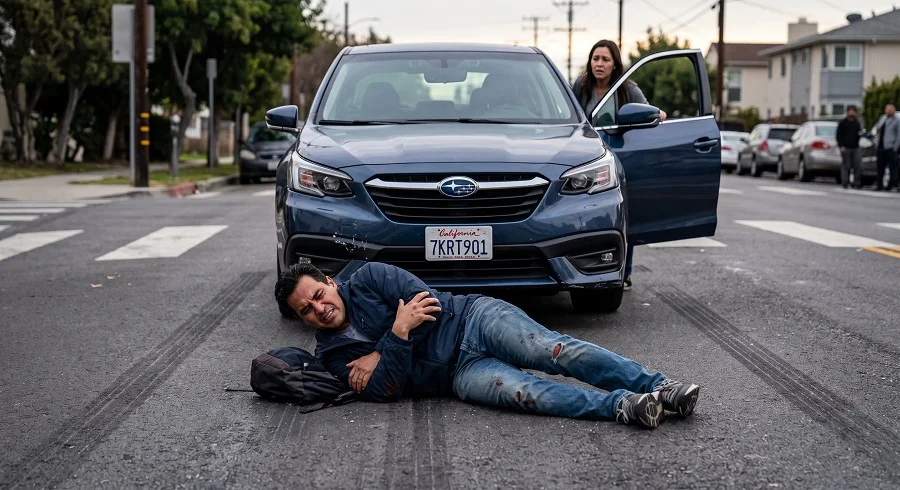
Understanding the common injuries sustained when pedestrians are hit by a car is crucial to evaluating your pedestrian injury claim. The type and severity of accident injuries directly affect the average payout and settlement amount in personal injury cases.
Minor to moderate injuries:
- Soft tissue injuries (sprains, strains, bruising)
- Lacerations and road rash
- Fractures (broken bones in arms, legs, ribs, or pelvis)
- Whiplash and neck injuries
- Contusions and internal bruising
Severe and catastrophic injuries:
- Traumatic brain injuries (TBI) — ranging from concussions to permanent brain damage
- Spinal cord injuries — potentially causing paralysis or permanent disability
- Internal organ damage
- Multiple fractures requiring extensive surgery
- Amputations
- Severe burns
- Permanent scarring and disfigurement
The severity of these pedestrian injuries determines not only the medical treatment required but also the average settlement value for pedestrian accidents. More severe injuries requiring extensive medical attention, ongoing medical treatment, and resulting in permanent disabilities typically warrant significantly higher pedestrian accident compensation.
Who Is Liable in a Pedestrian Accident
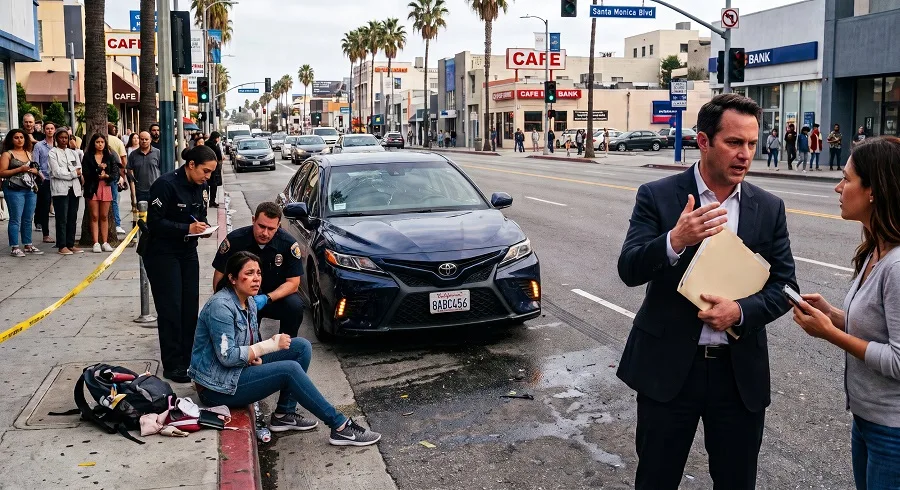
Determining liability in pedestrian accident cases is essential for recovering fair compensation. Unlike normal traffic accidents, pedestrian accidents often involve complex liability questions.
Who may be held liable:
- Negligent drivers: In most California pedestrian accidents, the at-fault driver is primarily responsible. Under California Vehicle Code Section 21950, drivers must exercise reasonable care and follow traffic laws to protect pedestrians.
- Property owners: Businesses or homeowners may share liability if poor lighting, broken sidewalks, or missing signs on their property contributed to the accident.
- Government entities: Cities or agencies may be liable for unsafe road conditions, lack of crosswalks or signals, or poorly maintained pedestrian areas.
- Vehicle manufacturers: If a vehicle defect contributed to the pedestrian accident, the manufacturer may be liable through a product liability claim.
To hold a driver liable and secure pedestrian accident compensation, your attorney must generally prove four elements of negligence:
- Duty of care: The driver owed you a legal duty to operate their vehicle safely.
- Breach: The driver violated that duty, for example by speeding, texting, or failing to yield.
- Causation: The driver's breach directly caused the collision and your injuries.
- Damages: You suffered legally recognized harm, such as medical bills, lost wages, or pain and suffering.
Fault and criminal charges are handled separately. A driver who was impaired or fled the scene can face DUI, hit-and-run, or even gross vehicular manslaughter charges, and those penalties proceed regardless of any comparative fault assigned to the pedestrian in the civil claim.
Damages Recovered in Pedestrian Hit-and-Run Accidents
Pedestrian hit-and-run victims in California may be entitled to various types of compensation, including both economic and non-economic damages.
In hit-and-run cases, California law allows punitive damages to punish the at-fault driver's egregious conduct. These damages are awarded when the driver's behavior shows malice, oppression, or fraud. Fleeing the accident scene demonstrates such reckless disregard for others' safety that punitive damages are potentially available in addition to economic and non-economic damages.
How Insurance Companies Calculate Pedestrian Accident Compensation
Insurers rarely volunteer the full value of a claim, so understanding how adjusters price a pedestrian hit by car settlement helps you recognize a lowball offer. Most carriers start with your economic losses and then apply one of two common formulas to your pain and suffering.
How to Maximize Your Pedestrian Accident Compensation in California
The choices you make in the days and weeks after a crash have a direct, measurable impact on your final pedestrian accident settlement. A few disciplined steps protect both your health and your claim:
- Get medical care the same day. Adrenaline can mask a concussion or internal injury, and a same-day record creates a firm link between the crash and your injuries.
- Document everything. Photograph the scene, your injuries, and the vehicle, then collect witness contact information before anyone leaves.
- Speak with a pedestrian accident attorney before the insurer does. Represented victims consistently recover more, even after attorney fees.
- Follow your treatment plan. Attending every appointment prevents insurers from arguing your injuries were not serious.
- Stay off social media. A single photo of you active or smiling can be used to minimize your pain and suffering.
Mistakes That Can Lower Your Pedestrian Hit by Car Settlement
Knowing what not to do is just as important as knowing what to do. The following errors routinely reduce the value of a pedestrian accident claim, and each one is avoidable:
- Delaying treatment or leaving gaps in your care, which insurers use to question the seriousness of your injuries;
- Giving a recorded statement to the adjuster without a lawyer present;
- Accepting the first offer, which is almost always well below the claim's true value;
- Handling the negotiation yourself against experienced adjusters who price claims for a living;
- Posting about the accident or your daily activities on social media;
- Waiting too long to consult an attorney, allowing evidence to disappear and deadlines to pass.
Pedestrian Accident Lawsuit: What You Need to Know

If you've been injured in a pedestrian accident, understanding the legal process is crucial for protecting your rights and pursuing fair compensation. This section outlines key steps and considerations in a California pedestrian accident lawsuit.
The Pedestrian Accident Settlement Process
While every case is unique, the pedestrian accident settlement process generally follows these key steps:
- Initial consultation and investigation: Before a formal claim is filed, you'll consult with an attorney. They will evaluate your case, gather initial information, and begin investigating the accident to determine liability and the extent of your damages.
- Demand letter and insurance claim: Your attorney will prepare and send a demand letter to the at-fault driver's insurance company. This letter outlines the details of the accident, your injuries, and the compensation you are seeking.
- Insurance company investigation and response: The insurance company will conduct its investigation, which may involve contacting you and witnesses and reviewing medical records. They will then respond to the demand letter, either with a settlement offer or a denial of the claim.
- Negotiation and settlement: If the insurance company makes an offer, your attorney will negotiate with them to reach a fair settlement. This process can involve back-and-forth communication, additional documentation, and potentially mediation.
- Settlement agreement: If a mutually agreeable settlement is reached, both parties will sign a legally binding settlement agreement. This agreement releases the at-fault party from further liability in exchange for the agreed-upon compensation.
- Filing a lawsuit and discovery: If a fair settlement cannot be reached through negotiation, your attorney will file a lawsuit. The discovery phase of the lawsuit involves gathering further evidence, taking depositions, and exchanging information with the other side.
- Mediation or arbitration: Before trial, the court may require mediation or arbitration, in which a neutral third party facilitates a settlement.
- Trial: If all other attempts at resolution fail, the case will proceed to trial. Your attorney will present your case to a judge or jury, who will determine liability and the amount of damages you are entitled to recover.
While most pedestrian accident cases are resolved through settlement before reaching trial, it's crucial to have an attorney who is prepared to litigate your case effectively if necessary. They will guide you through each step of the process, protecting your rights and working to maximize your recovery.
Benefits of Hiring a Pedestrian Accident Lawyer
A pedestrian accident claim can be legally complex to handle on your own. Hiring our experienced pedestrian accident lawyers can significantly increase your chances of a fair settlement.
- Thorough investigation: We gather key evidence to prove fault and support your claim.
- Insurance negotiation: We deal with insurers and fight for the payout you deserve.
- Accurate damage calculation: We ensure all medical costs, lost wages, and pain and suffering are fully accounted for.
- Trial readiness: If needed, we build your case for court and represent you at trial.
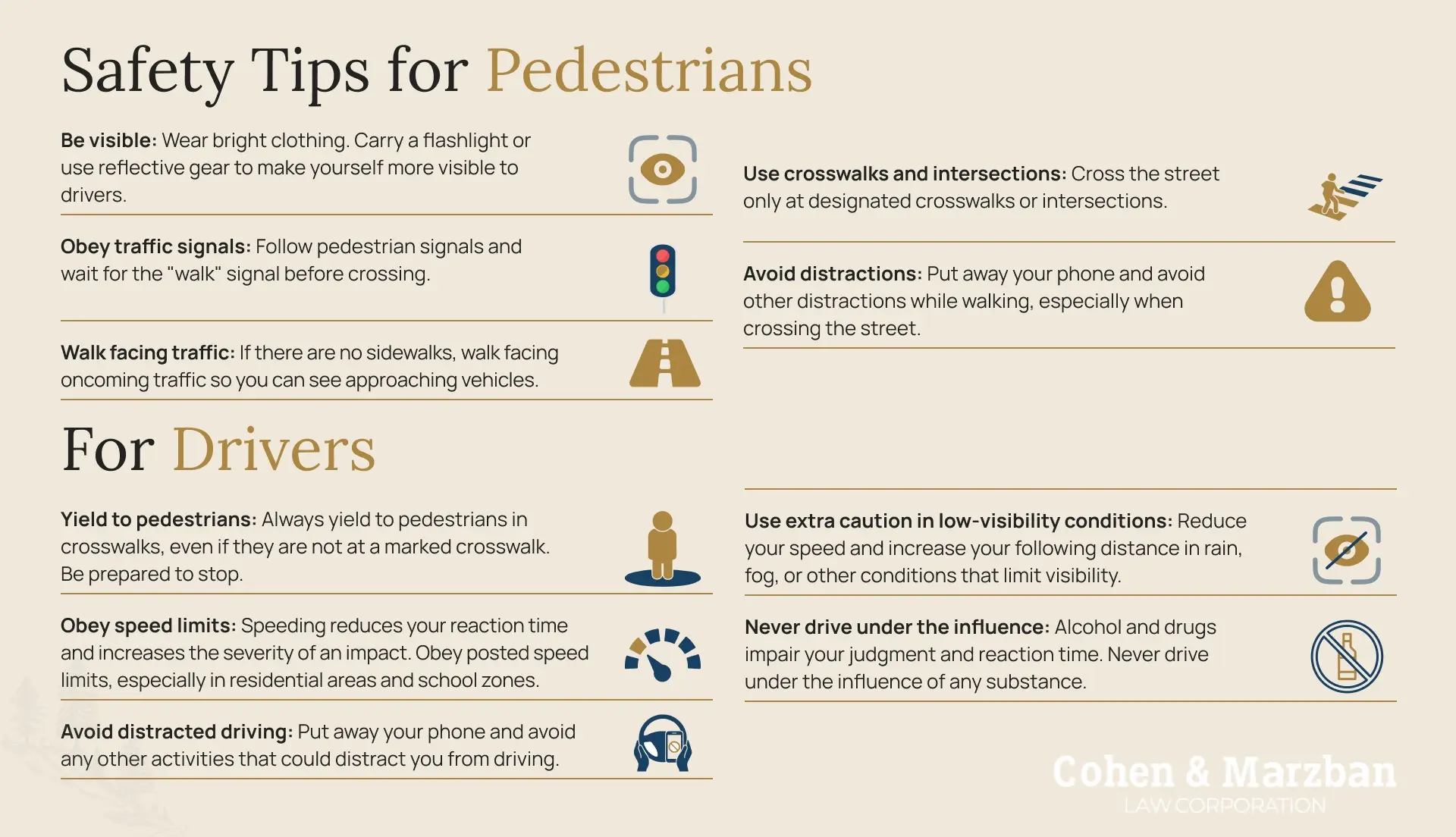
Safety Tips for Pedestrians and Drivers in California
Pedestrian accidents are often preventable when both drivers and pedestrians stay alert and follow the rules of the road. According to the California Office of Traffic Safety (OTS), staying informed and practicing safe behaviors can significantly reduce the risk of collisions.
Here are some essential safety tips for both:
.webp)